





Stock options vs. warrants—both give someone the right to buy shares at a set price, but they serve completely different purposes. Options compensate employees and advisors. Warrants sweeten deals with investors, lenders, and partners. Use the wrong one and you'll create tax headaches, confuse investors, or complicate your next funding round.
It's easy for founders to get confused with different stock instruments. Stock options and warrants may look similar as they both give the holders the right to buy stock in the future. Warrants are most commonly used in conjunction with Venture Debt funding while stock options are a powerful way to motivate and reward start-up equity teams. Understanding how the full suite of equity instruments works and using the right mix to fuel your growth is important.
This article explains the key differences between stock options and warrants, when each is typically used, and how they appear on your cap table—so you can choose the right instrument and avoid common mistakes.
Stock options: The incentive slice
What are stock options?
Stock options give someone the right (but not the obligation) to purchase company shares at a fixed price (also known as the exercise or strike price) within a specific timeframe. In startup land, you're mostly dealing with two types:
- Incentive Stock Options (ISOs). Tax-advantaged options for employees (not contractors or advisors).
- Non-Qualified Stock Options (NSOs). More flexible, can go to anyone, but with different tax treatment.
When do you use stock options?
Options are your go-to when you're:
- Employee compensation. Hiring employees and want to offer equity as part of compensation.
- Engaging with advisors. Bringing on advisors who'll provide ongoing value.
- Team alignment and motivation. Aligning long-term interests between your team and company success.
The vesting schedule reality
Here's what makes options particularly suited for team members: vesting schedules.
Most options vest over 4 years with a 1-year cliff. This means your new hire doesn't own any options until they've stuck around for a year, then they start earning them monthly. It's a retention tool as much as it is compensation.
If someone leaves after 6 months? They walk away with nothing. After 18 months? They keep whatever's vested, but unvested options typically evaporate.
Tax implications
The complexity here is exactly why keeping accurate records in your cap table system isn't optional—it's essential when tax season rolls around.
- For ISOs. If structured correctly, employees can get capital gains treatment instead of ordinary income tax rates. But there are rules—lots of them—and the dreaded Alternative Minimum Tax (AMT) can rear its head.
- For NSOs. Taxed as ordinary income when exercised, based on the difference between the strike price and the fair market value. Then capital gains (or losses) on the eventual sale.
Learn more about stock options.
Warrants: The deal sweetener
What are warrants?
Warrants are also the right to purchase shares at a fixed price, but they're typically issued as part of a transaction, not as compensation. They're longer-term instruments that can last 5-10 years (sometimes longer).
Think of warrants as an extra incentive that says, "Not only are you getting what we agreed to, but if this company does well, you get to participate in that upside too."
When do you use warrants?
Warrants typically show up in these scenarios:
- Venture debt deals. Your lender wants some equity upside along with interest payments
- Strategic partnerships. A vendor provides services in exchange for cash plus warrants
- Bridge rounds. Investors get warrants as a bonus for bridging you to your next funding
- Fundraising. Sometimes issued alongside preferred stock to sweeten the deal
Learn more about stock warrants.
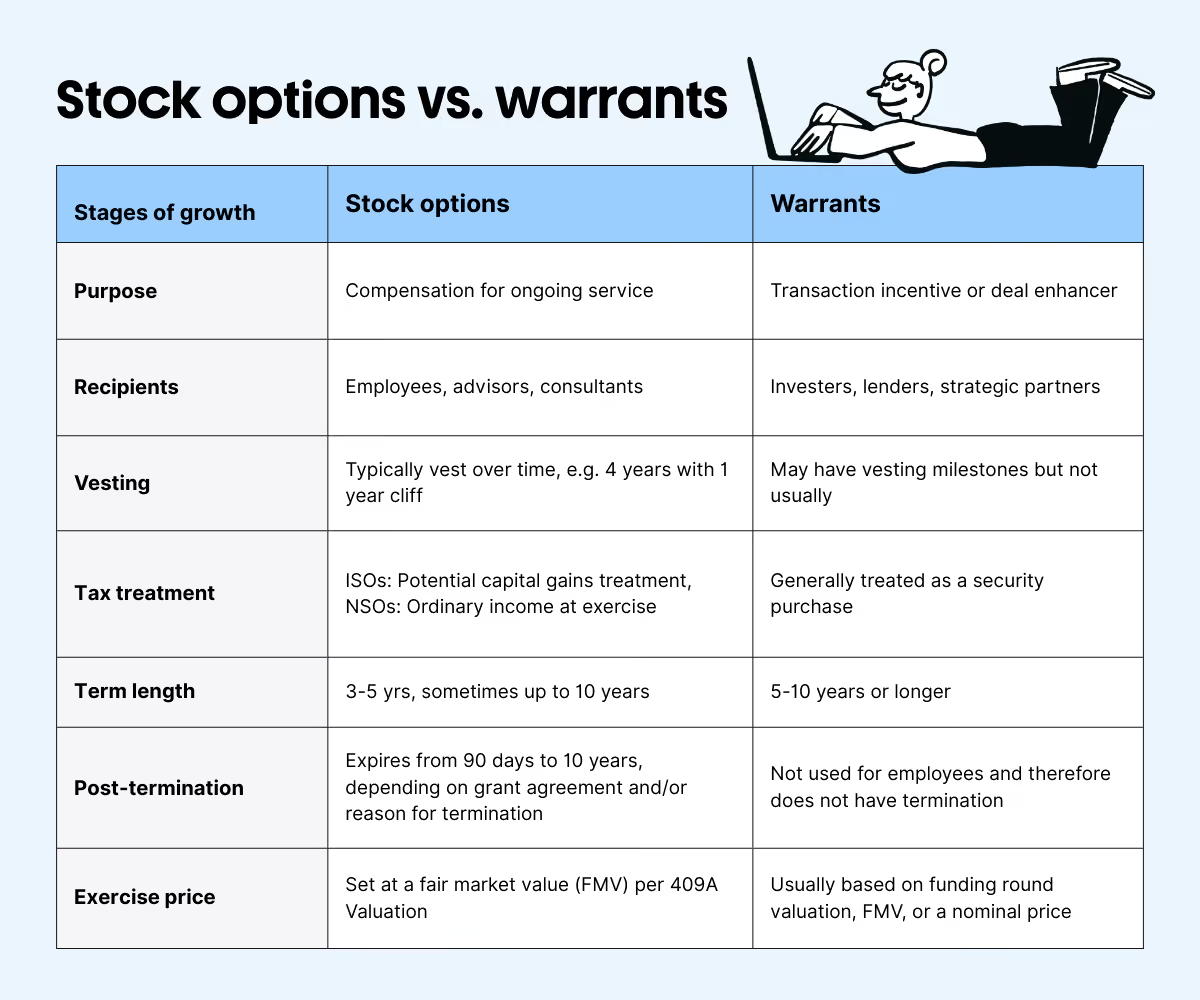
Stock options vs warrants, side by side comparison
The cap table implications
Here's where founders often stumble: both options and warrants can dilute existing shareholders. When an investor asks about your fully diluted cap table, they want to know: "If everyone exercised everything, what would I own?"
This includes:
- Outstanding shares
- Options granted (even if unvested)
- Warrants issued
- Convertible notes and SAFEs that would convert at the current round's terms
Tracking gets messy fast
Imagine this scenario:
- You have 200 employees with options at different strike prices
- You've issued warrants to lenders
- You've got advisors with NSOs
- You're closing a new funding round that will trigger some anti-dilution provisions
Without proper cap table management software, you're juggling multiple spreadsheets, forgetting about that warrant you issued 18 months ago, and potentially misrepresenting your dilution to new investors.
This is exactly the kind of complexity that makes investors nervous and due diligence painful.

Cake Equity manages both stock options and warrants in one platform—no more juggling spreadsheets or forgetting about that warrant from 2 years ago.
- Track options and warrants in one centralize cap table and also in separate views
- See fully diluted ownership in real-time (options + warrants + everything else)
- Get alerts before warrants expire or vesting cliffs hit
- Model fundraising scenarios to see dilution impact before you commit
- Export audit-ready reports for due diligence
Try Cake Equity free and keep your cap table clean from day one.
Common mistakes founders make with options and warrants
Most founder mistakes with options and warrants don’t show up right away. They surface later during diligence, pricing a round, or modeling dilution, when fixes are expensive and trust is on the line. On Cake, we see the same missteps again and again. They’re not rare edge cases. They’re small early decisions that quietly compound over time.
Mistake 1: Using the wrong instrument
Issuing options to a vendor when you should use warrants (or vice versa) creates confusion and potential tax issues down the road. Options are compensation, so giving them to a service provider who's not providing services gets complicated.
Mistake 2: Not documenting properly
Every option grant needs a board resolution and an option agreement. Every warrant needs a warrant agreement. Skip the paperwork and you're creating problems for your next funding round.
Mistake 3: Forgetting about outstanding warrants
That warrant you issued 2 years ago? It's still out there. When you're calculating dilution for your Series A, you need to include it. Investors will find it in due diligence, and if it's a surprise, that's a red flag.
Mistake 4: Using inconsistent valuations
Your 409A valuation determines your option strike prices. If you're issuing warrants, the pricing may not be consistent with your current valuation.
Tips for managing stock options and warrants
Getting options and warrants right usually comes down to having clear systems, not deeper expertise. The teams that stay out of trouble tend to document decisions early, keep their cap tables up to date, and review them regularly. These steps reflect the patterns we see across startups with fewer surprises later on.
1. Document equity decisions as they happen
Clear, timely documentation reduces confusion later and makes due diligence smoother.
- Options: Board approval → option agreement → recorded in your cap table system
- Warrants: Board approval → warrant agreement → recorded separately, not in the option pool
Keep all equity documents in one place. If an agreement takes more than a few clicks to find, it’s likely to slow you down when it matters.
2. Track stock options and warrants separately
Options and warrants serve different purposes and should be modeled as distinct instruments. A well-set-up cap table typically shows:
- An accurately sized and tracked option pool
- Warrants listed separately with exercise prices and expiration dates
- One-click fully diluted cap tables
- Visibility into upcoming warrant expirations or exercise windows
This clarity helps investors, boards, and founders rely on the same numbers.
3. Review your cap table on a regular schedule
Equity data changes over time, especially as grants, exercises, and exits occur. Regular reviews help keep everything aligned. Common review cadence we see working well:
- Monthly: Review new grants or issuances
- Quarterly: Check exercises, terminations, and expirations
- Before fundraising: Run a full dilution analysis including all options and warrants
- Annually: Review your 409A and confirm strike prices
A simple rule of thumb: any option or warrant issuance should be documented and reflected in your cap table within 24 hours. This consistency reduces surprises during diligence.
The bottom line for founders
Stock options and warrants aren't interchangeable—they're specialized tools for different situations. Options are your equity compensation workhorse for building a team. Warrants are transaction sweeteners.
Using the right one matters. But just as important is tracking them properly.
As your company grows, your equity structure gets more complex. Every funding round, every new hire, every warrant issued adds another layer. The founders who thrive are the ones who treat their cap table like the critical company asset it is.
Remember: Investors notice clean cap tables. They notice founders who understand their equity structure. And they definitely notice when due diligence uncovers surprises that weren't disclosed upfront.
Ready to clean up your cap table?
If you're currently tracking options and warrants in spreadsheets or worse, in an expensive cap table platform, paying for features you don’t need, it’s time to rightsize your cap table. Cap table management isn't just about compliance; it's about making smarter decisions, moving faster, and looking professional when it matters most.
Cake Equity helps startups manage their entire equity lifecycle—from option grants to warrant tracking to complex fundraising scenarios. See exactly how dilution affects every stakeholder, model future rounds, and keep your cap table audit-ready.
Start your free trial and see why hundreds of startups trust Cake Equity to keep their equity clean, compliant, and ready for their next milestone.
Your questions about stock options vs warrants, answered
What is the main difference between stock options and warrants?
Stock options compensate employees and advisors for ongoing work, while warrants are issued to investors and lenders as part of business deals. Options vest over time based on continued service. Warrants can have vesting milestones but aren't service-based—they remain valid regardless of employment status.
When should I use stock options vs. warrants?
Use stock options for employees, advisors, and consultants doing ongoing work. Use warrants for venture debt deals, strategic partnerships, bridge rounds, and investment transactions. Ask yourself: am I compensating service or sweetening a deal?
Do warrants dilute existing shareholders?
Yes. Warrants dilute shareholders when exercised and are included in fully diluted cap table calculations.
Can advisors receive stock options or warrants?
Advisors typically receive stock options (NSOs) because they provide ongoing strategic value. Warrants would only make sense if the advisor is investing money or providing a one-time transactional service.
What's the tax difference between stock options and warrants?
ISOs can qualify for capital gains treatment with special rules. NSOs are taxed as ordinary income at exercise. Warrants are generally treated as security purchases with capital gains on sale. We highly recommend consulting a tax professional for your situation.
How do I track stock options and warrants on my cap table?
Track options within your option pool. List warrants as separate line items outside the pool with exercise prices and expiration dates. Use cap table software like Cake Equity for accurate tracking.
What happens to warrants if the company is acquired?
Warrants typically accelerate and are either exercised or cashed out during acquisition, depending on the warrant agreement terms. Treatment should be documented in the original warrant agreement.
Can I convert stock options to warrants or vice versa?
No. They're legally distinct instruments with different tax implications. You'd need to cancel one and issue the other (with board approval), which may trigger tax consequences.
How often should I review my cap table for options and warrants?
Ideally, monthly for new grants, quarterly for full audits (exercises, terminations, expirations), before any fundraising for dilution analysis, and annually for 409A reviews. Document any new issuance within 24 hours.
This article is designed and intended to provide general information in summary form on general topics. The material may not apply to all jurisdictions. The contents do not constitute legal, financial or tax advice. The contents is not intended to be a substitute for such advice and should not be relied upon as such. If you would like to chat with a lawyer, please get in touch and we can introduce you to one of our very friendly legal partners.