




Looking for the best equity management software for your startup? This guide covers the features that matter from seed to Series A, compares six leading platforms, and helps you choose the right one for your stage — based on real founder experiences and verified G2 data.
Equity management software comparison
How the top equity management platforms compare on features, pricing, and fit.
See why users love Cake, sign up today. Switching? Migration is free.
Here's a conversation I have almost every week. A founder calls in. They're about to close a round, their investors need a clean cap table, and their current equity tool is making that harder than it should be. The interface is clunky. The renewal invoice just doubled. And they're not 100% sure the numbers are right.
The founders I talk to at Cake didn't land here because they've never used an equity management software. Most of them have. They've tried the big platforms, started with spreadsheets that spiraled, or signed up for a tool that looked great at seed but became expensive and frustrating as they scaled.
The best equity management software isn't the one with the longest feature list or the most popular brand name. It's the one that meets you where you are today and scales with you through Series A and beyond — without forcing you onto enterprise pricing before you're ready.
In this guide, I'll break down the features that actually matter for scaling startups, then walk through the top equity management platforms in the market today, where each one shines and where it falls short. Whether you're evaluating your first platform or thinking about switching, this is the guide I wish every founder had before that first call with me.
What is an equity management software
Equity management software is a platform that centralizes a company's cap table, equity grants, compliance requirements, and stakeholder information in one place. It replaces the patchwork of spreadsheets, legal documents, and email chains that most startups start with — and that almost all of them outgrow.
A typical equity management platform handles cap table management, stock option administration, vesting schedules, scenario modeling, compliance reporting, and stakeholder portals. Some tools focus narrowly on cap table management. Others combine cap tables, ESOP administration, fundraising tools, and compliance into a single platform.
There is a meaningful difference between a tool that records equity and one that helps manage it. Recording means storing ownership data. Managing means the platform tracks vesting automatically, models how a new funding round affects ownership, maintains compliance with 409A valuations, and gives team members a clear view of what their equity is worth.
At Cake, we see most startups benefit from making the move to dedicated software as soon as they take on outside investment or issue their first equity grants. The longer a company waits, the messier the migration tends to be.
Features to look for in equity management software
Not every equity management platform is built for the same stage. Here are the features that matter most when you're scalnig.
1. Cap table management
A cap table is a startup's single source of truth for ownership. Equity management software should handle share classes, SAFEs, convertible notes, and ownership percentages without manual calculations or version control issues.
Key capabilities to evaluate include real-time updates, version history, and the ability to generate investor-ready reports on demand. If an investor asks for your cap table at 9:00 AM and you can't send a clean export by 9:05, it's worth asking whether your tool is keeping up.
2. Equity incentive plans
Equity incentive plans — including ISOs, NSOs, RSUs, and RSAs — are one of the primary ways startups attract and retain talent. A strong equity management platform lets companies create option pools, issue grants, manage vesting schedules, and send offer letters with built-in legal templates and e-signing.
The best platforms also include an employee equity experience that helps team members visualize what their equity is worth. Equity compensation is only effective as a motivator when the people receiving it understand what they hold.
3. Scenario modeling and fundraise tools
Scenario modeling allows founders to model dilution scenarios, understand how SAFEs convert, and compare post-money ownership structures before entering a fundraise. This capability helps prevent founders from giving away more of the company than intended — or walking into a board meeting with numbers that don't hold up.
In my experience, this is the feature founders underestimate until they actually need it. And when they need it, they need it fast.
4. Compliance and 409A valuations
A 409A valuation is required for any US company issuing stock options. It establishes fair market value and protects both the company and employees from tax penalties. Some equity management platforms bundle 409A into their subscription. Others charge thousands of dollars separately.
Beyond 409A, compliance features to look for include ASC 718 reporting, Form 3921 generation, and QSBS attestation support.
- 409A Valuations — for issuing equity grants and fundraising readiness
- ASC 718 Reporting — for GAAP Stock compensation expense compliance
- QSBS Attestation — for long-term capital gains planning and optimization
- 83(b) Elections — for incorporation-stage compliance
These requirements arrive faster than most founders expect. Having them built into the equity management platform is significantly easier than engaging a third-party provider mid-audit.
5. Ease of use and fast onboarding
The best equity management platforms offer guided setup, migration support, and an interface that founders, lawyers, and early employees can all navigate without specialized training. If setup takes more than a week, that often signals friction in the ongoing experience as well.
I talk to founders every week who switched platforms because the setup was too painful or the UI made simple tasks frustrating. Fast onboarding isn't just convenient — it's a signal that the platform was built with founders in mind.
6. Transparent pricing
Startup budgets are tight, and equity management costs should be predictable. Hidden fees, per-stakeholder charges that spike at growth thresholds, and 409A valuations billed separately can turn an affordable-looking plan into an expensive commitment.
Several platforms offer free tiers but what's included varies widely. A free plan covering five stakeholders with basic cap table features is very different from one that includes add-on features like equity plans, modeling, and compliance. Make sure to check what happens to your bill at 25, 30, and 40 stakeholders.
7. Employee and stakeholder experience
An employee equity portal gives team members direct access to their equity holdings, vesting schedules, and ownership value — without requiring a Slack message to the founder for an update. A strong portal turns equity from a confusing line item into a tangible motivator.
We built Cake around the idea that equity works as a retention tool only when people understand it. If your team can't see what their options are worth or when they vest, you're leaving one of your most powerful hiring and retention tools on the table.
Best equity management software for growing startups
We reviewed the top equity management platforms on the market, weighing features, pricing, user reviews, and how well each one serves startups from seed through Series A and beyond. We also looked them up on G2 to see reviews from actual customers. Here's how they compare.
1. Cake Equity — best overall for scaling startups
Cake Equity is the top-rated equity management platform on G2, ranking #1 in Implementation, Usability, Results, Momentum, and Relationship in the Equity Management category — as rated by startup founders, investors, and attorneys.
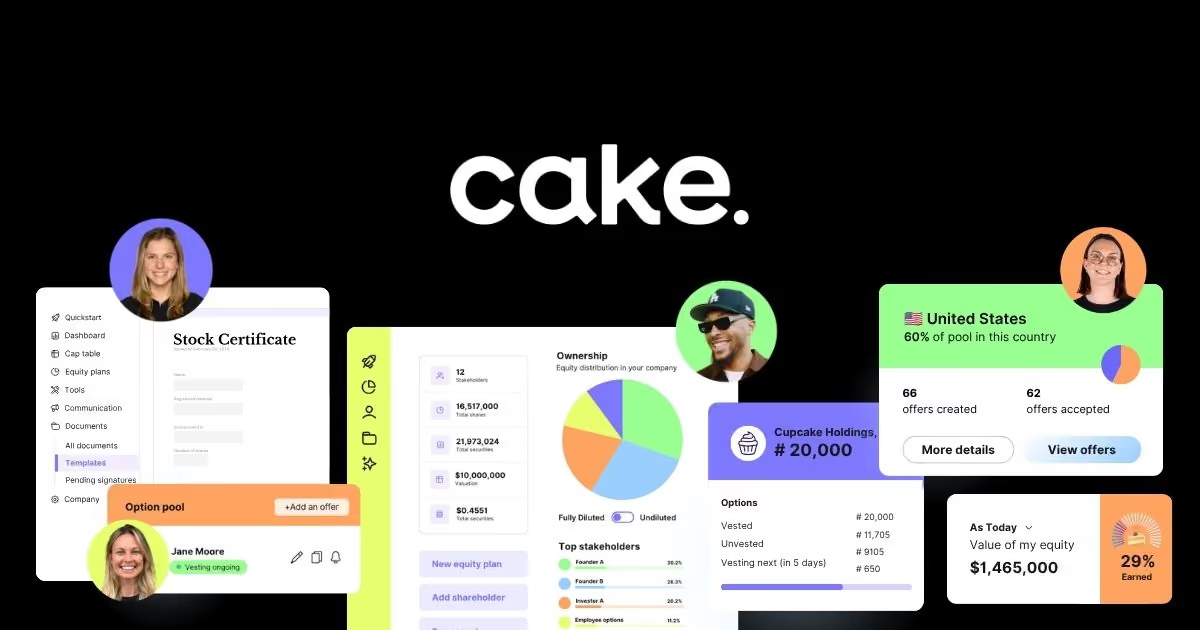
Cake was built for the moment equity gets real. That's usually when you're issuing your first grants, running your first 409A, converting SAFEs into a priced round, or managing a team that's starting to ask what their equity is actually worth. It's designed for founders, legal teams, and finance leads at growing startups who need a complete, compliant equity stack.
I'm obviously biased here (disclaimer: I work at Cake), so I'll let the numbers and our customers do most of the talking.
What I hear most from founders who switch to Cake is that they're surprised by how much simpler it is. Not simpler as in fewer features, simpler as in the features work intuitively from day one.
Joe Gagnon, Co-founder & CEO at Raynmaker.ai, a serial entrepreneur with 25+ years of experience, tried Cake after using Carta across multiple previous companies. He needed a platform that could make equity feel real for every employee from day one:
"Ease of setup, intuitive user interface, loved the assets available with the platform, like standard option letters. I was a former Carta user. Happy to have left them."
—Joe Gagnon, Raynmaker.ai
Dave Christianson, Legal Counsel at Tracksuit, describes a moment that captures why employee-facing equity tools matter. When Tracksuit announced their Series B, they invited every employee to log into Cake and see their updated equity value in real time. The funding milestone became a personal one for every person on the team.
"Cake was quite a powerful part of our Series B. When we did the Series B announcement, we included — as part of that, you can now log into Cake and see what your equity's worth."
—Dave Christianson, Tracksuit
Jana Gendron, Supply Chain Controller at Vaporox, cut equity management costs by 40%, down from a $16,000 annual Carta bill, and migrated in two weeks:
"The cost was just not making any sense for us. You guys were able to offer something that was affordable for us."
—Jana Gendron, Vaporox
Tom Hakel, Founder & CFO at CXO Strategies, was a Carta user for 12 years before a community of Silicon Valley startups recommended Cake:
"The delightful surprise was it was a better product. We saved money with a better product."
—Tom Hakel, CXO Strategies
Key features:
- Intuitive UI built for founders, not enterprise finance teams
- Startup-friendly and transparent tiered pricing
- Built-in 409A, ASC 718, Form 3921, and QSBS attestation
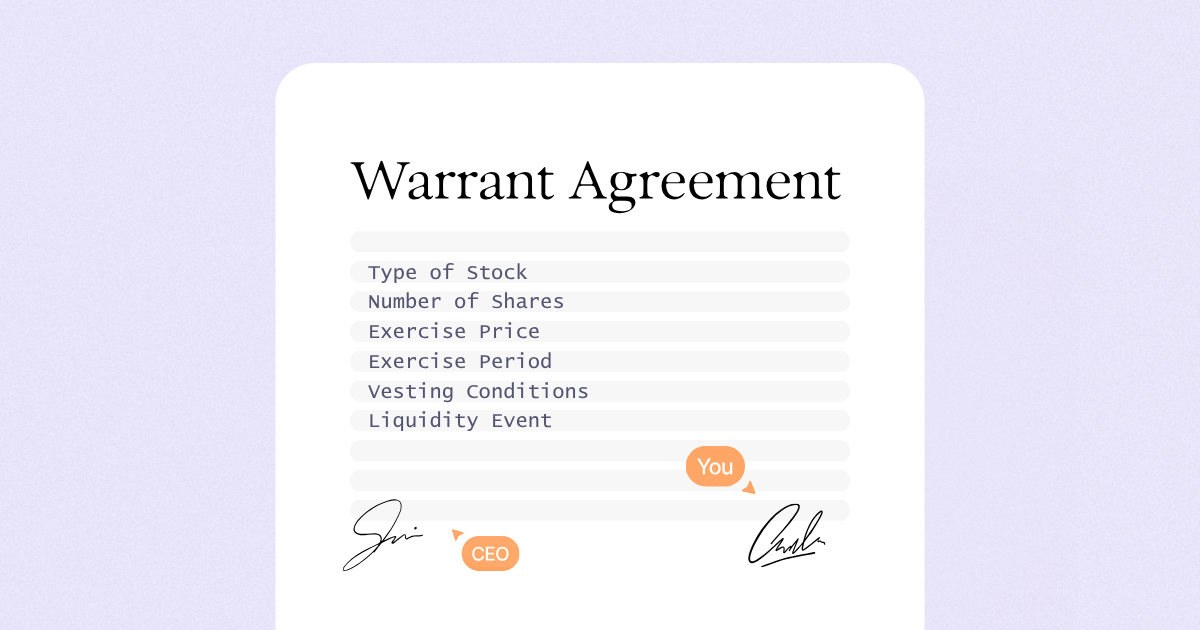
- Full equity management: cap table, stock options, RSUs, RSAs, SAFEs, convertible notes, warrants
- Employee equity app for team motivation and transparency
- Free migration from spreadsheets or other platforms
- Over 120 verified G2 reviews with consistently high marks for ease of use, support, and user experience
- Quarterly payment plans for cash flow flexibility
Pricing: Free (5 stakeholders) → Build ($1,000/yr, 25 stakeholders) → Team ($2,750/yr, 40 stakeholders — most popular, includes 2x annual 409A) → Pro (custom). Stakeholder-based pricing, no surprise fees.
Best for: Startups from seed through Series A and beyond, especially founders switching from more expensive or complex tools.
For detailed feature comparisons, see Cake vs. Carta and Cake vs. Pulley. See also: Learn how to migrate your cap table from Carta to Cake.

Manage your equity with confidence, from day one
Cake Equity was built for founders who want to get equity right without enterprise complexity or the enterprise price tag.
Our platform gives you a clean cap table, easy stock option management, built-in 409A valuations, and a team equity experience that actually motivates — all in one place.
With free migration, transparent pricing, and a support team that founders actually want to talk to, switching is simple. Over a hundred verified reviewers on G2 agree: Cake ranks #1 in the categories that matter most.
2. Carta
Carta has been in the equity management market since 2012 and carries significant name recognition in the US venture ecosystem. Many US-based investors already use Carta, which creates a network convenience for startups in the same ecosystem.
Scaling founders often find that Carta's pricing escalates quickly as their company grows, and the support experience doesn't always match the price tag. Several G2 reviewers have noted that the platform feels built for enterprises first and startups second. One reviewer noted: "Cake Equity feels like the next generation, more dynamic and attentive to user needs."
Pricing: Free launch plan (up to 25 stakeholders, less than $1M raised). Paid plans are quote-based and not publicly disclosed. User reports suggest annual costs typically range from $4,500 to $9,000+ depending on company size.
Best for: Later-stage companies or startups deeply embedded in the Carta investor ecosystem.
3. Pulley
Pulley is a US-focused equity management platform popular with YC-backed startups. Founded in 2019, the platform covers cap table management, fundraising modeling, SAFE tracking, 409A valuations, and equity plan administration with a clean, focused interface.
Based on G2 data, Pulley's user base skews toward small businesses, with less mid-market coverage compared to platforms like Cake. Founders whose equity needs grow — more share classes, international employees, complex vesting structures — sometimes find the platform limiting at scale.
Pricing: Seed (free, fewer than 25 stakeholders, less than $1M raised) → Startup ($1,200/year, 25 stakeholders) → Growth ($3,500/year, 40 stakeholders) → Custom.
Best for: US-based seed-stage startups who want a clean, simple cap table tool.
4. Shareworks (Morgan Stanley at Work)
Shareworks is an institutional-grade equity management platform backed by Morgan Stanley. Originally designed for large public companies managing complex global equity compensation plans, Shareworks later expanded to serve private companies.
The platform offers deep global compliance capabilities, robust tax reporting, and the institutional credibility of the Morgan Stanley brand. However, the learning curve is steep, onboarding timelines extend into weeks or months, and pricing is enterprise-tier. For startups, Shareworks is designed for a different audience, and the experience reflects that.
Pricing: Not publicly disclosed. Enterprise-tier, usage-based.
Best for: Late-stage or public companies with complex, multinational equity plans.
5. Ledgy
Ledgy is a Zurich-based equity management platform designed for European startups and companies with employees across multiple jurisdictions. The platform specializes in multi-country compliance (IFRS 2 reporting, country-specific regulations), employee equity portals, and HR integrations with tools like Pave, Figures, and over 40 HRIS platforms. Ledgy holds ISO 27001 certification for data security.
Ledgy is lighter on US-specific features such as 409A valuations and QSBS support. Pricing climbs at Scale and Enterprise tiers, and onboarding on basic plans is largely self-serve.
Pricing: Launch (free, up to 25 stakeholders) → Growth (€3/stakeholder/month, minimum 25 stakeholders) → Scale (custom) → Enterprise (custom).
Best for: European or multi-country teams needing jurisdiction-specific compliance and HR integration.
6. Global Shares (J.P. Morgan)
Global Shares, now part of J.P. Morgan, is a full-service equity management platform for large, often public, companies with complex global share plans. The platform covers over 100 countries and provides integrated banking and brokerage services alongside equity administration.
Global Shares serves organizations with thousands of equity holders who require full-service administration, share plan management, and cross-border tax optimization. Onboarding takes months, and pricing is entirely custom. I include it here because it appears in "best equity management software" searches — but it is not designed for seed-to-Series A startups.
Pricing: Custom enterprise pricing only. No self-serve option.
Best for: Large public companies or pre-IPO companies with thousands of equity holders globally.
Equity management software FAQs
What is the best equity management software for startups?
The best equity management software is the one that fits your current stage and scales without forcing enterprise pricing too early. It’s always beneficial to look at ratings and testimonials from users.
Based on G2 ratings from startup founders, investors, and attorneys, Cake Equity ranks #1 in Implementation, Usability, Results, Momentum, and Relationship in the Equity Management category. Cake is designed for startups from seed through growth stage and offers transparent pricing with a free tier.
If these are the criteria that matters to you, Cake is the right fit for you.
How much does equity management software cost?
Equity management software typically costs between free and $8,000+ per year, depending on stakeholder count and compliance needs.
In practice, we often see founders revisit their platform after significant price increases — especially as they scale past 25 or 30 stakeholders. Carta, in particular, is frequently cited by founders who switch to Cake due to rising annual costs that no longer match their stage.
Pricing structures vary. Some platforms bundle 409A valuations and compliance reporting. Others charge separately, turning a low starting price into a much higher total cost over time. Paying only for the features you actually need (and adding more as you grow) can materially change long-term spend.
When should a startup switch equity management software?
Most founders switch when something breaks usually right before a raise.
Common triggers include:
- Investor due diligence exposing reporting gaps
- Pricing doubling after crossing a stakeholder threshold
- Manual vesting errors or spreadsheet cleanups
- No built-in 409A support
What we consistently see: switching between rounds is manageable. Switching mid-diligence is stressful. If you’re already questioning your system, that’s often an early signal worth exploring.
Is free equity management software enough as you scale?
Free equity management software can be a strong starting point for early-stage startups. For companies with, say, 5 stakeholders and a simple ownership structure, a free plan often provides everything needed to maintain a clean cap table and issue initial grants. It allows founders to formalize equity early without adding unnecessary overhead.
As companies grow, needs typically evolve. Additional stakeholders, option plans, fundraising rounds, and compliance requirements can introduce complexity that may require more advanced features.
The key is choosing a platform that offers a clear path from free to growth — so you can start simple, then add functionality as your company scales, without disrupting your cap table or team experience.
What features matter most before Series A?
Before Series A, modeling accuracy matters more than feature volume. Founders typically prioritize:
- Real-time dilution forecasting
- SAFE and note conversion modeling
- Option pool planning
- Investor-ready reporting
The moment negotiations start, percentage points matter. If modeling takes hours instead of minutes, that’s friction at exactly the wrong time. Strong scenario modeling doesn’t just support fundraising, it protects founder ownership clarity.
How risky is it to switch equity platforms?
Staying on the wrong platform can be riskier than switching. Migration complexity depends on your data hygiene and documentation. With structured support, transitions can often happen within weeks.
The real risk appears during audits or due diligence, when inaccurate records or incomplete compliance become visible. Founders rarely regret switching early. They often regret waiting too long.
Check out Cake's free migration support.
Does equity management software affect employee retention?
Yes — because clarity drives motivation. An employee equity portal should:
- Show vesting clearly
- Display ownership transparently
- Help employees understand potential value
When equity lives in spreadsheets or requires founders to manually answer questions, it loses motivational power. Teams are more likely to think like owners when ownership feels real and accessible — not abstract and hidden.
This article is designed and intended to provide general information in summary form on general topics. The material may not apply to all jurisdictions. The contents do not constitute legal, financial or tax advice. The contents is not intended to be a substitute for such advice and should not be relied upon as such. If you would like to chat with a lawyer, please get in touch and we can introduce you to one of our very friendly legal partners.