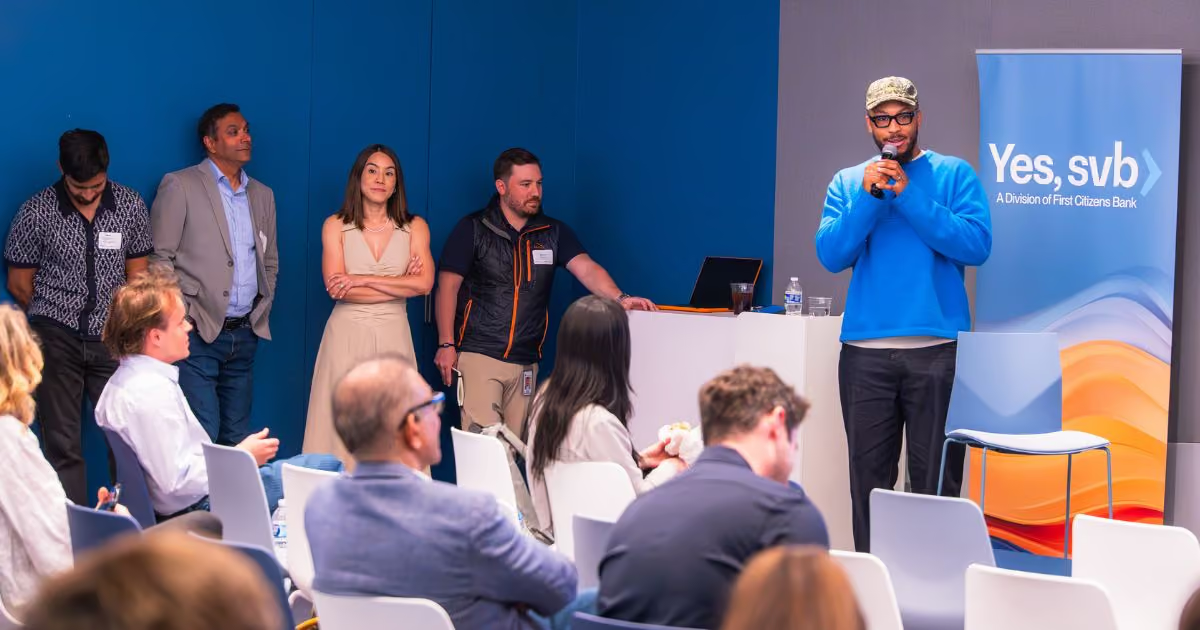

Last week I co-hosted a panel at Boston Tech Week on one of the questions every seed-stage founder is wrestling with right now:
What does it actually take to raise a Series A in 2026?
The panelists brought serious depth. Swisscom Ventures, TechStars Follow-on Fund, Mignano Law Firm, SVB, Pilot.com, and TriNet all in the same room, going deep on the mechanics, the mindset, and the mistakes.
What surprised me wasn't the insights. It was how many founders in that room were benchmarking themselves against the wrong things, building toward the wrong outcomes, and in a few cases, quietly setting themselves up for problems that don't show up until it's too late.
Here's what came out of the room.
Only 10% of seed companies raise a Series A.
Adjust your frame accordingly.
This was the number that landed hardest in the room. One in ten. And it's not far off from what recent research shows. The Series A crunch has been deepening, and the success rate has been moving in the wrong direction.
The panelists were direct about it: not because they wanted to discourage anyone, but because the benchmark you use to evaluate your own readiness matters enormously. If you're reading TechCrunch headlines and comparing yourself to the outliers, your self-assessment is off.
The more useful question, one panelist put it bluntly, is: "If I were an investor looking for an 8-10x return, would I bet on my company right now?"
That's the lens. Not "are we growing" or "do we have happy customers" but "does this company have what it needs to return a fund?"
The metrics have moved. Especially with AI.
ARR per employee used to be the benchmark at $200-300K. With AI, the panelists were putting the new benchmark at $1-3M ARR per employee — a direction SaaStr has been tracking too, as AI-native companies increasingly operate in a different efficiency league entirely.
Other numbers the room flagged as increasingly important:
- Burn multiple. Investors are actively tracking burn at 0.5x of incoming revenue. Efficiency matters more than it did three years ago.
- NRR, retention, and expansion. Revenue alone isn't enough. Investors want to see it holding and growing within your existing customer base.
- Pilot-to-contract conversion. One or two pilots isn't proof. You need to show the pattern repeats.
Open Evidence was cited in the room as a sharp example of what's possible: $8M ARR to $120M in a year. That kind of trajectory happens at the intersection of strong metrics and a compelling narrative. You need both.
Investor relationships are built before you need them.
One of the most consistent pieces of advice across the panel: the best time to start talking to Series A investors is right after you close your seed round.
Ask for advice. Not money. Build the relationship before there's any pressure on either side.
Then, when you're ready to run a process, you're not introducing yourself. You're updating someone who already has context on your company and has watched you execute. That's a very different dynamic.
The mechanics that followed from this:
- Research fit deeply. Don't pitch generalists. Find the specific partner at the firm whose portfolio your company actually belongs in.
- Create calendar density. Every VC will wait until the last minute without competitive pressure. If you have parallel conversations, use them. Once you have a term sheet, go back to every other investor immediately. FOMO is real.
Cap table hygiene isn't administrative. It's existential.
The legal and cap table section of the panel went places I don't think everyone was expecting.
SAFEs came up hard. If you've raised $3-4M on convertible instruments and haven't priced your round, the panelists were clear: it may be time. SAFE notes can accumulate quietly and create a dilution shock that surprises both founders and incoming investors when a price round finally happens.
The other patterns flagged:
- MFN and pro-rata rights granted loosely can inflate how much you need to raise at Series A and complicate the terms. Think carefully before you hand them out.
- Liquidation preferences and hidden clauses in early documents surface in diligence and can derail deals. One panelist said it plainly: there is nothing more expensive than cheap lawyers.
- For founders holding common shares, the QSBS five-year clock starts the day shares are issued. The tax implications of that timeline are worth understanding early.
This is the part of Series A readiness that rarely shows up in startup media but shows up in every serious diligence process.
Know the company you're actually building before you raise
This one sat with me after the event.
Founder-investor relationships are long. A typical Series A investor is in your business for seven to ten years. One panelist made the point that founders should show up to those conversations with confidence, not desperation, because you're choosing a partner just as much as they're choosing you.
Part of that confidence comes from knowing what you actually want.
If your honest exit goal is a $10-15M acquisition that changes your life, that's a real and legitimate outcome. But if you raise from a fund that needs a billion-dollar exit to return their LP commitments, you've put yourself in a structure that's misaligned from day one.
The panelists noted that roughly 25% of Series A companies get acquired rather than raising further. Knowing which path is realistic for your company, and being honest about it in conversations, tends to filter for better long-term fit on both sides.
What I took away from the room
Boston Tech Week gave us a full afternoon of this. The room was packed, the questions were sharp, and the panelists went deeper than the usual platitudes.
If I had to distill it: the founders who raise Series As aren't necessarily the ones with the fastest growth or the biggest market. They're the ones who've built something real, kept their cap table clean, found the right investors early, and been honest with themselves about what kind of company they're building.
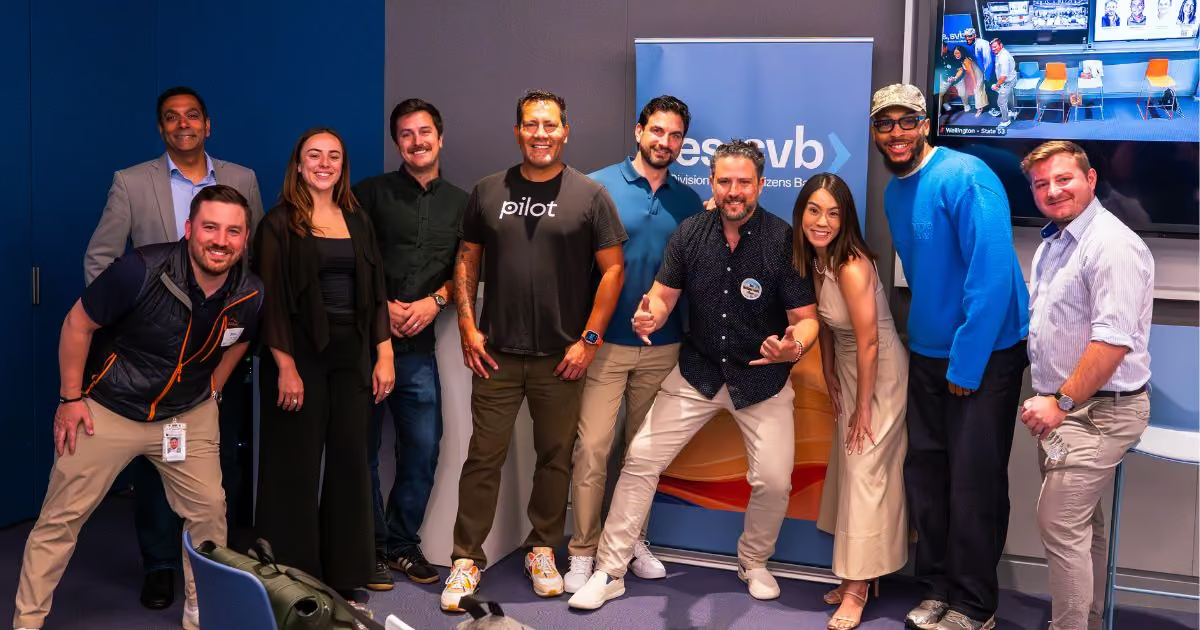
At Cake, we spend a lot of time thinking about the structural side of this: the cap table, the equity, the documents that sit underneath the relationship. The conversation at Boston Tech Week was a reminder that the structural work is what keeps the strategic work from falling apart.
Thanks to everyone who joined us, and to the panelists for being so genuinely useful.
If you want to follow up on anything from the event, I'm at garrison@cakeequity.app. I'm on Linkedin too. Let's connect.
This article is designed and intended to provide general information in summary form on general topics. The material may not apply to all jurisdictions. The contents do not constitute legal, financial or tax advice. The contents is not intended to be a substitute for such advice and should not be relied upon as such. If you would like to chat with a lawyer, please get in touch and we can introduce you to one of our very friendly legal partners.