
As early-stage startups head into 2026, fundraising standards continue to tighten. Investors expect founders to bring organization, accuracy, and transparency to every aspect of their equity and financial structure.
An organized record of documents, a clean cap table, and a strong grasp of ownership mechanics now matter as much as the pitch itself. For founders planning a seed or Series A raise, readiness has become a strategic advantage.
Here are 10 ways to prepare your startup for fundraising in 2026.
1. Move off spreadsheets and establish a clean, reliable cap table
Cap tables kept in spreadsheets often accumulate errors, especially after multiple SAFEs, notes, or option grants. Investors expect accurate, real-time ownership records that match signed agreements and reflect fully diluted ownership.
At Cake, we see many founders move their cap tables off spreadsheets to meet rising investor expectations, as dynamic cap table management is now considered a baseline requirement for investors. If your cap table still lives in a spreadsheet, it is time to migrate to a dedicated cap table software.
2. Plan your raise and model dilution scenarios
Scenario modeling different raise amounts, valuations, and option pool changes helps founders understand how ownership will shift over time. Investors want to see that you have thought through dilution and runway before they commit capital. Set aside time to model various fundraising scenarios before entering investor conversations.
3. Update your 409A valuation if you plan to issue stock options
A 409A valuation determines the fair market value (FMV) of your common stock. It is required before granting stock options and protects stakeholders from unexpected tax exposure. If you intend to issue new options in 2026, an updated 409A valuation ensures grants are compliant and helps investors see that your equity processes adhere to regulatory standards.
4. Review your ASC 718 and stay on top of stock-based compensation reporting
ASC 718 governs how companies record the expense of equity awards on their financial statements. Accurate reporting creates a clearer financial snapshot for investors and prevents last-minute cleanup during diligence. Early-stage companies that stay current with ASC 718 often move more smoothly through investor reviews.
5. Consider QSBS as part of your long-term exit strategy
Qualified Small Business Stock (QSBS) allows eligible shareholders to potentially exclude up to $10 million (or more, depending on basis) from capital gains. Because eligibility depends on early choices, such as corporate structure and asset thresholds, founders who examine QSBS requirements in advance are better positioned to preserve this significant advantage when a future exit occurs.
6. Centralize investor relations through a single platform for updates and documents
During fundraising, investors expect quick access to accurate information. Centralizing pitch decks, financials, ownership summaries, and board documents through a unified investor portal creates a more professional experience and reduces back-and-forth requests. A single location for updates helps build trust and shows that the company is organized and prepared.
7. Educate your team with equity tools, calculators, and insights
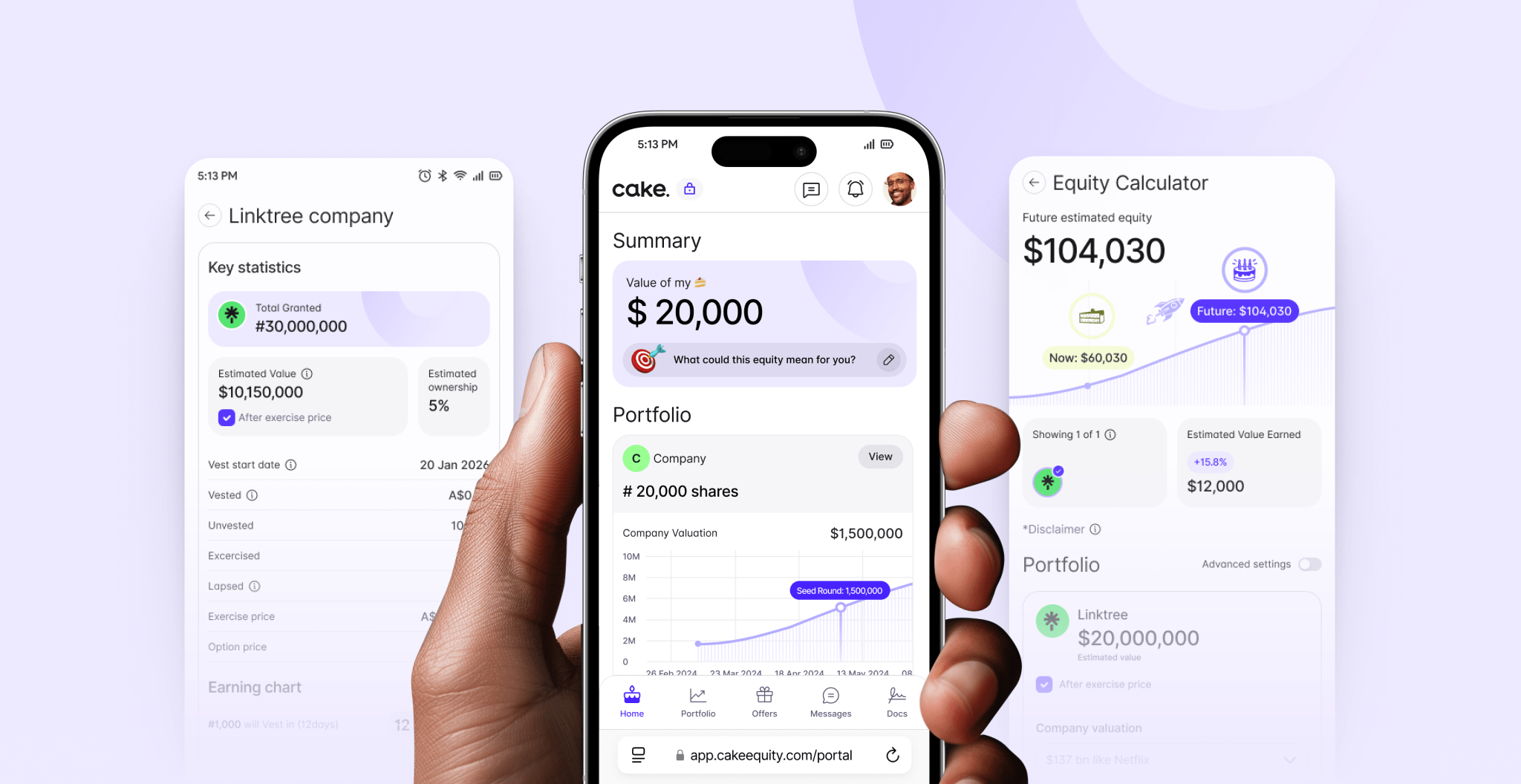
Employees are most aligned when they understand the value of their ownership. Giving team members access to an equity platform with calculators, visual breakdowns, and educational tools helps them see what their equity could become and encourages long-term commitment. Simple insights, such as vesting progress notifications, transform equity from something abstract into something meaningful.
8. Organize all documentation and ensure it matches your cap table
Before entering a fundraising process, founders should confirm that grant agreements, SAFEs, notes, amendments, vesting schedules, and corporate records are consistent with what appears in the cap table. Mismatched or incomplete documentation is one of the most common diligence delays. A clean, verified document trail or audit log demonstrates reliability and reduces legal cleanup costs.
9. Build transparency into your equity practices
Clear reporting and consistent communication help investors trust your numbers and help employees understand how decisions affect their ownership. Transparency is now viewed as a sign of strong internal discipline. Establish a routine for sharing updated equity information so stakeholders always know where they stand.
10. Develop strong networks ahead of your fundraise
Warm relationships often lead to warm introductions. Participation in founder groups, industry meetups, accelerator networks, and peer-learning communities exposes startups to mentors, operators, and early investors long before a round begins. In a competitive fundraising environment, trust and familiarity often matter as much as metrics.
Join our community of startup founders if you haven't yet. Follow us on Linkedin to get updates—we have plenty in store in 2026!
Fundraising in 2026 requires more than compelling metrics or a polished pitch deck. Investors want clear documentation, clean ownership structures, and thoughtful communication. By preparing early through organized records, reliable reporting, team education, and strong networks, founders can accelerate diligence and improve their chances of closing a successful round.
Explore how Cake can streamline your cap table and equity management this 2026. Sign up or book a demo today.
This article is designed and intended to provide general information in summary form on general topics. The material may not apply to all jurisdictions. The contents do not constitute legal, financial or tax advice. The contents is not intended to be a substitute for such advice and should not be relied upon as such. If you would like to chat with a lawyer, please get in touch and we can introduce you to one of our very friendly legal partners.