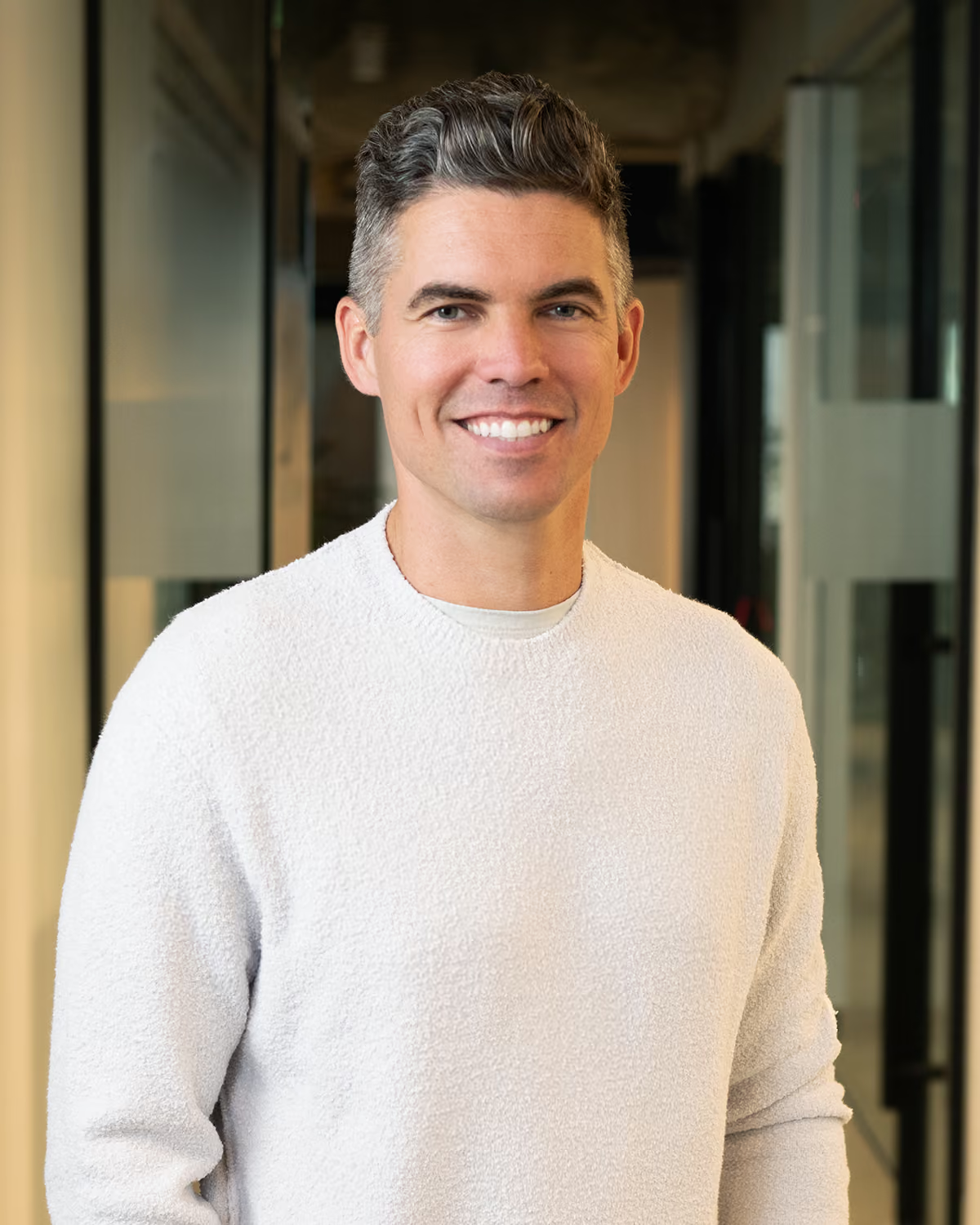
Charlie Ross
COO
Cake Equity

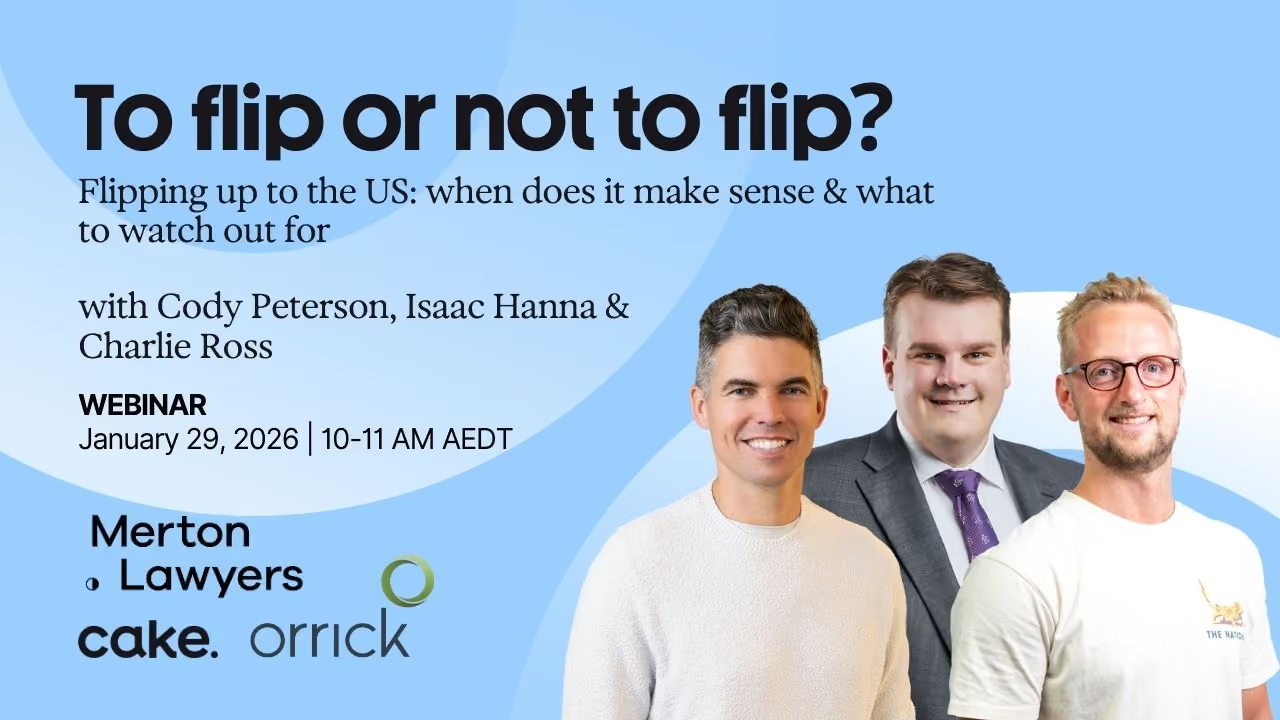

The question comes up in almost every serious fundraising conversation with US investors: should we flip to a Delaware C-Corp?
For Australian founders eyeing US capital, the answer isn't automatic. In a recent Cake webinar, Isaac Hanna (Senior Associate, Merton Lawyers), Cody Peterson (Partner, Orrick), and Charlie Ross (COO, Cake) broke down the mechanics, timing, and tradeoffs of restructuring to the US.
TL:DR don't flip preemptively, but be ready to move fast when the right investor asks.
The primary driver is access to US venture capital. A significant share of global VC is concentrated in the US, and many American investors prefer (or require) portfolio companies to be Delaware corporations before writing a check.
The reason is structural. As Cody explained, Delaware C-Corps stop the flow of tax to investors and their limited partners. For US funds, this matters. That said, Isaac noted that more US investors are now comfortable investing directly into Australian proprietary limited companies than five years ago, even if the preference for Delaware remains strong at the institutional level.
But investor preference alone isn't enough. Founders also need a genuine reason to have US operations. "Do they have a need for a footprint in the US? Are they going to have people on the ground?" Isaac asked. Without that, the tax and governance complexity may not be worth it.
Charlie put it simply: Cake didn't flip preemptively. It was based on a request from a US investor. Cake completed its flip in 2021, and the team learned that preparation matters more than timing the decision itself.
If your primary market is Australia, flipping introduces cost and complexity without clear upside. Isaac was direct: "Australian-owned is really important to a lot of Australians. If your primary market is Australia for your customers, flipping up probably doesn't make a huge amount of sense."
Cody reinforced this from the US side: "You should not be flipping just because you think it's going to make you more attractive to a US investor." The goal isn't to look fundable. It's to be fundable, with the right structure for your actual business.
Founders also shouldn't assume a flip is required before conversations begin. More US funds are investing into Australian structures than five years ago. The better approach is to understand the process, have your documentation ready, and move quickly if an investor makes it a condition of closing.
A flip-up is a restructure where shareholders in the Australian company transfer their shares to a new US entity (typically a Delaware C-Corp) and receive stock in return. If you owned 30%, you still own 30%. If you held a particular class of shares, you receive the closest match in the new structure.
This isn't just tidy housekeeping. Australian tax law requires shareholders to maintain the same proportional ownership and rights to qualify for CGT rollover relief. Without it, every Australian shareholder faces a capital gains tax bill on a transaction that generates no cash to pay it.
The process usually runs alongside a financing round. Founders negotiate term sheets with their lead investor while simultaneously preparing the restructure. The flip closes immediately before the financing, so new investors put money directly into the Delaware entity.
Charlie described Cake's experience: "It was about six months. We had a high number of stakeholders, the round kept growing as more investors joined, and we used it as a corporate cleanup at the same time."
Timelines vary. A sole founder with a clean cap table might complete a flip in a week. A company with dozens of shareholders, convertible notes, employee share schemes, and IP considerations will take months.
Legal costs come from multiple directions: Australian lawyers, Australian tax advisors, and US counsel. If you're raising at the same time, your investors' legal fees are often reimbursed by the company as well.
Cody estimated that a typical US Series Seed financing runs around $100,000 USD in total legal fees, including investor counsel. The flip adds to that, depending on complexity.
"This is not a process you can cheap out on," Isaac said. "But the ill-prepared is where the costs really balloon."
Charlie noted that Cake succeeded in getting 100% of signatures, against advisor expectations, because the founders had stayed in regular contact with every investor over the years.
The Australian company doesn't disappear. It becomes a wholly owned subsidiary, still subject to Australian corporate and tax law. You'll still need an Australian resident director, and reporting obligations continue.
Charlie's advice: "Don't do it preemptively. But get your ducks in a row so that when the right investor says 'I need you to be a Delaware C-Corp,' you can move in months, not years."
Isaac's framing was similar: "Have a plan for why you're going to do this. The US is our future market, that's where our investors are, that's where our ultimate exit is going to be. Make sure that's all part of the long-term strategy."
Cody's take: "Focus on building a really exciting business that people are excited to invest in, while having key experts to make sure you're not totally going off the rails when it matters."
Flipping is a tool, not a milestone. Used well, it opens doors. Used prematurely, it adds cost and complexity without purpose. The founders who navigate it best are the ones who treat it as a decision to be ready for, not a box to check.




.avif)